


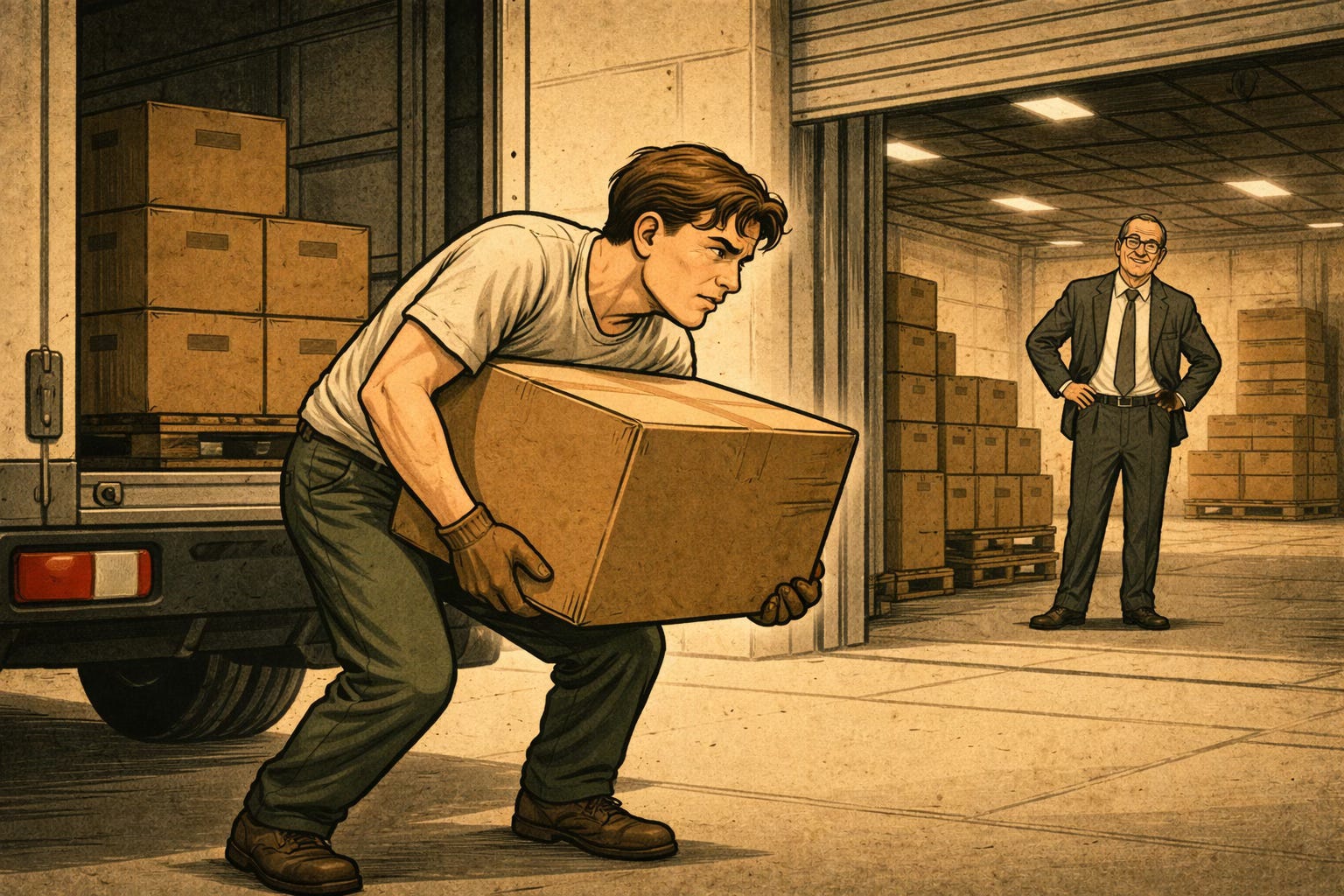
I was 19 years old, in my first job outside my parents’ donut shop. My manager sent me out to help unload a delivery truck. Part of the load was heavy boxes full of books. That meant lifting them off the back, twisting and bending, and dropping them to the warehouse floor.
I asked her for a back support. She told me if I wanted one, I could go buy it myself.
The internet wasn’t what it is today. I didn’t even know where to find one. And making barely more than minimum wage didn’t give me much to work with.
I hurt my back. Bad.
The pain hit me that night and didn’t stop. I went in for X-rays and found out I had a bulging disc at L4–L5. At 19 years old. The doctors didn’t want to do surgery on someone that young, so they put me on workers’ comp and chiropractic care.
I still walk around stiff every day. Because it happened so young, I don’t remember what it was like to not have pain in my back.
One $20 back brace could’ve prevented all of that.
It wasn’t even about the money. She just didn’t care enough to help me get one.
Hopefully, your tool failures won’t literally cripple someone. But the same mindset of “Just make do with what we’ve got,” is injuring your team’s performance, their morale, and sometimes their bodies.
Where This Fits
Expectations define the target. Measurements make it visible. Training builds the capability to hit it. Law 4 asks: Do they have what they need to do the job to the standard you’ve set?
If the answer is no, everything you’ve built so far stalls. You’ve handicapped your team’s work before it’s started.
What Most Managers Get Wrong
They have no idea what their people are working with.
They set the expectation, train them, and move on to the next fire. Meanwhile, their team is working with outdated software, broken equipment, or clunky workarounds they’ve cobbled together because nobody’s asked them what they need in months.
They look around and think, “They’re making it work,” and never ask what it’s costing.
Their team members stop bringing it up. They work harder to cover for tools that aren’t helping as they should. And mangers never see the drag because they’re not close enough to the work to notice it.
Over time, workarounds become “the way we do it here,” and leaders congratulate themselves for having “resourceful people.” When really, the system is failing and the team has just gotten good at hiding it.
They dismiss concerns when their people speak up.
Someone complains that the system is slow or the equipment doesn’t work right. And the response is some version of “We don’t have the budget,” or “You should be more resourceful,” or “That’s how I did it, and I managed.”
Every time you wave off a legitimate concern, you’re training your people to stop telling you what’s broken.
They treat tools as an expense instead of an investment.
When someone asks for better equipment or a new system, a lot of managers hear a line item. They weigh the cost against the budget and either reject it or push it off. What they don’t calculate is the cost of not having it. It shows up in the rework, the missed targets, the slow bleeding of time and morale when people are fighting their own tools.
They ignore tools that are right in front of them.
Sometimes the tool isn’t missing. It’s neglected. It’s sitting in the back, dirty, broken, or forgotten because nobody saw the value in maintaining it.
They give people tools without a strategy.
A tool without a clear purpose is clutter. Managers hand out new software, new equipment, new processes, and expect results just because the tools exist. But a tool only works when it’s tied to a clear expectation, the person knows how to use it, and there’s a reason for using it that connects back to what drives the business.
Law 4 Defined
So what counts as a “tool”? Anything that removes barriers between capable people and the outcomes you expect.
When the right tools are in place, the behaviors you’ve trained become the path of least resistance. The system makes the right way easier than the wrong way. When tools are missing or broken, you’re not testing skill or will. You’re testing tolerance for dysfunction.
A new tool often requires new training. Sometimes equipping a tool reveals that your expectation needs to be reframed. You’ll move back and forth between the Laws as needed.
A Neglected Tool Becomes A Sales Engine
Remember the store I took from a million to $3.5 million a year? One of the biggest levers was a tool nobody was using.
I asked everyone in the store what was holding them back. The overwhelming response was they had no traffic.
The store had a jewelry cleaning station that was meant to be up in front of the store where customers could see it. But the previous manager had it shoved in the back.
It was dirty. The ultrasonic cleaner didn’t work properly. The signs were old and faded. And years of dripping water left discolored streaks down the side.
It looked like garbage, so they treated it like garbage.
But I recognized it as a tool we could leverage.
I ordered a new ultrasonic cleaner. Then I spent a full day cleaning it inside and out, replaced the signage, and made sure it had everything it needed.
This store had an incredibly valuable neighbor: Von Maur, an upper-end department store. Those were exactly the customers I wanted.
So I wheeled that cleaning station right up to the lease line and positioned it near the Von Maur entrance.
I told them they were going to stand on the lease line and offer to clean people’s jewelry for free. I coached them to start a conversation while the jewelry was in the cleaner. To ask about special occasions coming up or recommend matching pieces. If they spotted a loose diamond, they just saved the customer from losing it and probably picked up a repair sale. They learned how to use the cleaning as a door opener and build the relationship from there.
Traffic started climbing. Sales started climbing. Our customer base grew. We became so busy that after a while, I was wheeling that cleaning station back into the store.
When traffic slowed down again, we’d bring it back out.
Nothing changed about the mall. Nothing changed about the economy. I didn’t get a better ad budget. I took a neglected tool, restored it, positioned it right, and trained people how to use it. One simple cleaning station became part of the engine that drove $2.5 million in growth.
What’s sitting neglected in your operation right now?
This Week’s Directive
This week, go to where your people do the work.
Pick one role or one function tied to your core drivers. Then ask two questions.
First, ask yourself: What tools does this person need to hit the standard I’ve set? What systems, equipment, resources, or processes does the work depend on?
Second, ask them: What’s slowing you down? What’s broken, missing, outdated, or harder than it needs to be?
But before you ask, frame it. Tell them you’re there to see how the work gets done and find out what’s in their way. Without proper framing, they’re likely to hide the workarounds, avoid the broken tools, and run the polished version of their job.
Make a list. Prioritize by impact. What’s causing the most drag on the metrics that matter most?
Your team will notice. Not just because the tool got fixed. But because you showed up, asked, and acted.
What This Forges
Somewhere in your operation right now, somebody is “unloading the truck.” They’re wrestling with software that fights them, equipment that doesn’t work right, or processes so clunky they’ve built their own workarounds just to get through the day.
Every time you send someone into that without what they need, you’re rolling the dice with their output, their energy, and your results. Most of the time the cost is subtle. It shows up in slower work, more errors, rising frustration, and surprise quittings.
When you take Law 4 seriously, effort stops getting wasted on compensating for broken or missing tools and starts converting directly into results.
You’ll also notice something shift in how they see you. When you walk the floor, ask what’s broken, and fix it, you build trust that no speech or policy can replicate.
Fully equip your people. Then step back and watch efficiency climb when they have the proper tools to work with.
Next up: Law 5. The next question is whether the environment they’re working inside helps them or holds them back.
Phil • Killing Crucibles
Stop Torching Talent • Start Equipping It
New here? Start with the introduction to the Nine Laws.

Next in the series: Law 5: Create A Productive Environment

Great read, definitely learned a lot. Thank you.